South Boston, MA Real Estate & Neighborhood Guide (02127)
South Boston, Massachusetts (ZIP code 02127), known locally as “Southie,” is a harborside Boston neighborhood bordered by the Fort Point Channel, the Seaport District, and Dorchester Bay. As of late 2025, the South Boston real estate market has a median condo sale price of approximately $970,000 and a median price per square foot near $882, with sub-markets ranging from the West Side's entry-level condos to City Point's beachfront single-family homes and newer condo construction along the neighborhood's Fort Point Channel border.
“South Boston enters 2026 having finished a transformation that took twenty years — from a working-class peninsula best known for triple-deckers and parish pride, to one of the most sought-after waterfront markets in the city. The median condo sale price reached $970,000 in late 2025, and the story underneath that number is bifurcation by geography: City Point and the streets closest to Castle Island command $1,100+ per square foot and move quickly, while West Broadway and the Lower End still offer genuine value for buyers priced out of the Seaport and the South End. Rents have climbed 11.9% year-over-year, one of the strongest landlord markets in Greater Boston, even as sales price appreciation has cooled to a modest 2–3%. Understanding which Southie you're buying into — the beach streets, the historic Heights, or the still-gentrifying West Side — is the difference between a smart entry point and an overpay.”
— Kopman Adler + Co.
South Boston — known to virtually everyone in the city simply as “Southie” — is a broad harborside peninsula immediately south and east of Downtown Boston, separated from the Financial District and the South End by the Fort Point Channel. Originally connected to Dorchester and known as Dorchester Neck, the peninsula was annexed to Boston in 1804 and has since grown to more than 1,300 acres through harbor landfill, making it one of the largest neighborhoods in the city by footprint. Its identity was forged as a working-class Irish-American enclave of parishes, triple-deckers, and waterfront industry, and that identity is layered today with restored Victorian rowhouses, newer low- and mid-rise condo buildings along its Fort Point Channel edge, and a beach-town character unlike anywhere else in Boston. Residents walk the Head Island Causeway loop around Castle Island, swim off Pleasure Bay, M Street Beach, and Carson Beach, and gather every March for the South Boston St. Patrick's Day Parade, one of the oldest and largest in the country. For buyers, South Boston offers something genuinely rare in an expensive city: three miles of harborfront parkland, a Revolutionary War historic district atop Dorchester Heights, walkability to the Seaport's innovation economy and the Financial District, direct highway and Red Line access, and a housing stock that ranges from $500,000 entry-level condos to $2.5 million-plus new-construction units — often within blocks of each other.
$900K – $2.2M+
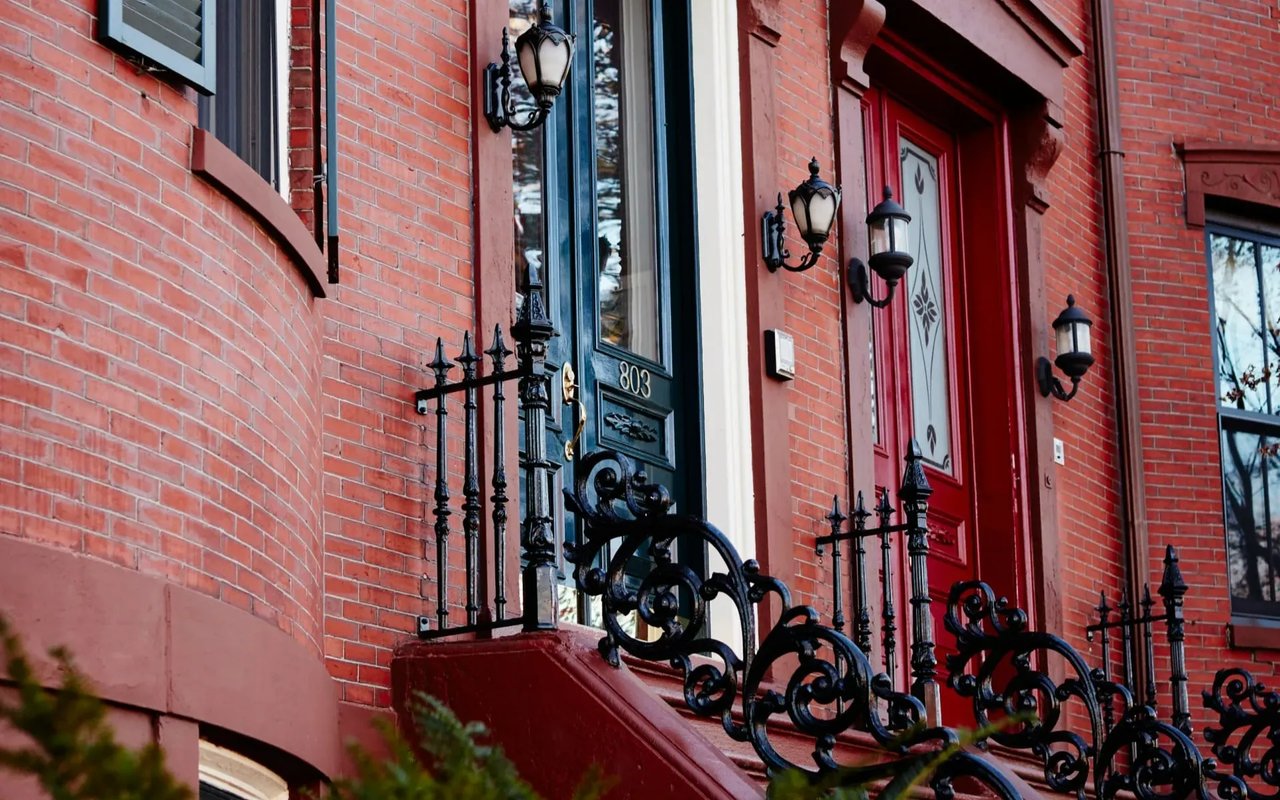
The defining housing type of Southie's residential core. Built primarily between the 1890s and 1920s to house dockworkers and factory families, these wood-frame and brick three-family and single-family conversions line the streets of City Point, Telegraph Hill, and the Lower End. Many have been fully gut-renovated into single-family homes or owner-occupied two- and three-unit buildings, retaining bay windows, wide porches, and small private yards — a rarity this close to downtown. Condition varies enormously street to street: a renovated single-family on a beach-adjacent City Point street can command well over $2M, while an untouched triple-decker on the West Side can still be found for under $1.1M. Off-street parking, even a single tandem space, adds a significant premium in a neighborhood where street parking is notoriously competitive.
$500K – $3M+
The largest and most liquid segment of the South Boston market. As of late 2025, the median condo sale price across the neighborhood was approximately $970,000, with price per square foot near $882 — up meaningfully year-over-year even as overall appreciation cooled. Studios and one-bedrooms in converted triple-deckers on the West Side start in the $500,000s; two-bedroom units, the most traded product type, typically sell between $690,000 and $900,000+ depending on street and finish level. The newest buildings and larger units on the East Side, particularly near Castle Island and along East Broadway, regularly clear $1.3M–$3M+. Days on market have lengthened somewhat, averaging in the high 40s, giving today's buyers more room to negotiate than in the frenzied years of 2021–2022.
$900K – $3M+
A growing share of South Boston's East Side — particularly along East Broadway, near the Reserved Channel, and in pockets of City Point and the streets bordering the Fort Point Channel — has been rebuilt over the past decade with new low- and mid-rise condo buildings, typically four to seven stories with elevators, garage parking, and roof decks that are genuinely scarce in the neighborhood's older triple-decker stock. This is new product built for South Boston's own market, not an extension of the high-rise towers next door in Seaport, and it should be evaluated on those terms: buyers here are paying for elevator access, secure parking, and modern building systems rather than concierge service or resort-style amenities. Two- and three-bedroom units in these newer buildings generally run $900,000 to $2M, with the largest units in the newest East Side developments occasionally reaching $3M — a real premium over the neighborhood's older housing stock, but a different, more modest tier of product than the full-service luxury towers found across the Fort Point Channel.
$1.4M – $3.5M+
Two- and three-family buildings remain a cornerstone of the Southie investment case, particularly on the West Side and in Telegraph Hill, where older triple-deckers still trade below full renovation value. Citywide vacancy remains under 3%, and South Boston rents have grown roughly 11.9% year-over-year — among the strongest landlord markets in Greater Boston — driven by young professionals working in the Seaport's tech and biotech corridor and the Financial District just across the Channel. Buyers who can execute a quality renovation on an owner-occupied multi-family consistently generate strong forced equity, and well-located multi-families are frequently absorbed before they reach broad marketing.
South Boston draws one of the most demographically varied buyer pools of any Boston neighborhood, a reflection of its rapid transformation over the past two decades. The largest and fastest-growing segment is young professionals working in the Seaport's technology, biotech, and financial services firms, drawn by a walk or short rideshare to the office and a lifestyle built around the harborfront rather than a high-rise lobby. Multi-generational Irish-American and Polish and Lithuanian families — many with roots in the neighborhood going back generations — continue to anchor the West Side and Andrew Square, and a meaningful share of transactions involve longtime residents trading up within the same few streets. Downsizing empty nesters increasingly choose South Boston over the suburbs for its walkability, beaches, and proximity to Boston Medical Center and the Financial District. Investors are a consistent presence, drawn by sub-3% vacancy and double-digit rent growth. And first-time buyers priced out of the Back Bay, South End, and Beacon Hill continue to see the West Side and parts of Telegraph Hill as their most realistic entry point into a historic, high-appreciation Boston neighborhood.
South Boston's investment case rests on a combination that is difficult to find elsewhere in Boston: a genuinely large land area with real room for continued redevelopment, sitting directly against one of the fastest-growing employment corridors in the country. The neighborhood's median condo price reached $970,000 in late 2025, a modest 2.3% increase year-over-year — appreciation has cooled from the pandemic-era frenzy, which is exactly what makes today's entry points more attractive than they've been in several years. What hasn't cooled is the rental market: citywide vacancy sits below 3%, and South Boston rents have climbed roughly 11.9% year-over-year, among the strongest landlord conditions anywhere in Greater Boston. Large-scale projects like the Washington Village redevelopment at Andrew Square and the ongoing reuse of the former Edison power plant site signal continued investment and densification, which should support values on the West Side over the coming decade even as it changes the neighborhood's character. The most compelling opportunities today remain unrenovated multi-family and single-family triple-deckers on the West Side and in parts of Telegraph Hill, where a quality renovation can create significant equity, alongside newer East Side condos that offer modern building amenities not typically found in the neighborhood's historic housing stock.
South Boston is best understood as four distinct sub-markets, each with its own housing stock, price point, and buyer profile — a distinction that matters enormously to both pricing and day-to-day lifestyle.
~$1,100+ / sq ft · Key Streets: East Broadway, Farragut Road, Marine Road
South Boston's easternmost and most beach-oriented section, bordered by Pleasure Bay, M Street Beach, and Castle Island. City Point commands the neighborhood's highest per-square-foot pricing, driven by water views, walkability to three beaches, and a dense stock of restored Victorians alongside newer condo buildings. This is where Southie's beach-town identity is most fully realized, and it draws buyers willing to pay a premium for that lifestyle within city limits.
Key Streets: K Street, G Street, Thomas Park
Home to the Dorchester Heights Monument and the 40-acre Dorchester Heights Historic District, listed on the National Register of Historic Places. Today the area is a walkable mix of restored rowhouses and condo conversions just west of City Point, with K Street widely regarded as one of Southie's most desirable addresses. Proximity to L Street Beach and the historic park gives Telegraph Hill a quieter, more residential feel than the busier West Side, at a modest discount to City Point pricing.
~$650–$900 / sq ft · Key Streets: West Broadway, Dorchester Street, D Street, West 4th–8th Streets
Long known to lifelong residents as the “lower end” or simply “the West Side,” this section runs from the Fort Point Channel toward Andrew Square and has been slower to gentrify than City Point, though it now benefits from the same proximity to downtown and the South End that has driven prices elsewhere in the neighborhood. West Broadway is Southie's commercial spine on this side — restaurants, bars, and neighborhood retail — while the surrounding residential streets remain the most accessible entry point into South Boston for buyers priced out of the East Side. Major redevelopment at Andrew Square, including the Washington Village project and continued reuse of former industrial parcels, is expected to reshape pricing here over the coming decade.
~$950–$1,200 / sq ft · Key Streets: East Broadway (upper), streets near the Reserved Channel
South Boston's northernmost blocks, where the neighborhood meets the Fort Point Channel, host a mix of historic converted warehouse buildings and the newest low- and mid-rise condo construction in South Boston. This is where the largest share of the neighborhood's recent new-construction activity has occurred, offering elevators, parking, and modern finishes that are hard to find in Southie's older triple-decker stock. Buyers here are typically prioritizing a short walk to the Seaport's offices and restaurants alongside South Boston's own lower-density, beach-town character — not luxury high-rise living, which remains a distinct, separate market across the Channel in Seaport proper.
Answers from the team at Kopman Adler + Co., who have lived and worked across Boston's South Boston neighborhoods for 20+ years.
As of late 2025, the median condo sale price per square foot in South Boston was approximately $882, up nearly 10% year-over-year, with a median sale price around $970,000. Pricing varies significantly by sub-neighborhood: West Side condos often trade in the $650–$900/sq ft range, while City Point and the newer construction along the Fort Point Channel border regularly exceed $1,000–$1,200+/sq ft.
Yes — South Boston is widely considered one of Boston's stronger long-term real estate investments, combining a large, still-evolving land base, direct proximity to the Seaport and Financial District job centers, three miles of public beach and parkland, and a rental market where vacancy sits below 3% and rents have grown nearly 12% in a single year. Price appreciation has moderated from the sharp run-up of 2021–2022, which many buyers see as a healthier, more sustainable entry point rather than a warning sign.
Inventory spans Victorian triple-deckers and single-family rowhouses ($900K–$2.2M+), condominiums in both older buildings and boutique new construction ($500K–$3M+), and two- and three-family investment properties ($1.4M–$3.5M+). Newer low- and mid-rise construction is concentrated on the East Side near the Fort Point Channel, offering elevators, parking, and modern finishes not typically found in the neighborhood's historic housing stock.
As of late 2025, days on market in South Boston averaged in the high 40s — longer than the frenzied pace of 2021–2022, but still a competitive, largely seller-favorable market overall. Well-priced, well-presented listings in City Point and Telegraph Hill often move faster, while West Side properties needing renovation can sit meaningfully longer.
It's more accessible than many close-in Boston neighborhoods, though still a meaningful commitment. Studio and one-bedroom condos on the West Side start in the $500,000s, well below City Point or East Side new-construction pricing, and two- and three-family properties allow an owner-occupant to offset their mortgage with rental income. Buyers priced out of the Back Bay, South End, and Beacon Hill often see South Boston's West Side and parts of Telegraph Hill as their most realistic entry point into a historic Boston neighborhood.
Three factors stand out: a genuinely large, still-redeveloping land base with room for continued densification around Andrew Square and the former Edison power plant site; sub-3% vacancy and rents up roughly 11.9% year-over-year, among the strongest landlord conditions in Greater Boston; and direct proximity to the Seaport's and Financial District's job centers, which anchors steady long-term rental demand. Multi-family and triple-decker renovation projects remain the most reliable path to forced equity.
South Boston's split character — beach-block City Point, historic Telegraph Hill, the still-transitioning West Side, and the newer construction along the Fort Point Channel border — means pricing and buyer expectations vary block by block. Buyers and sellers should look for agents who track these distinctions closely rather than relying on a single neighborhood average. Kopman Adler + Co. brings 20+ years of experience transacting across South Boston's sub-markets, from West Side triple-deckers to East Side new construction, with the hyper-local market intelligence this neighborhood's varied buyer pool demands.