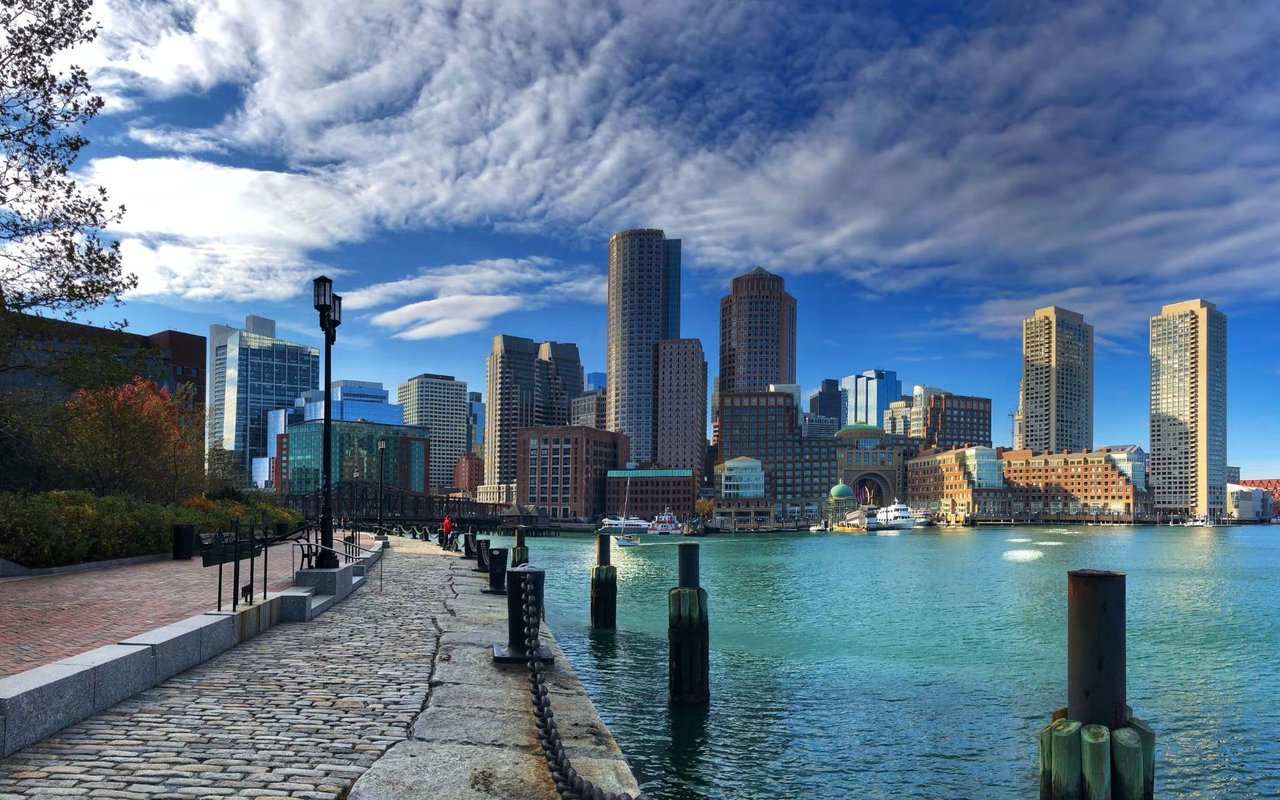
Seaport, Boston Real Estate & Neighborhood Guide (02210)
Seaport, Massachusetts (ZIP code 02210), is Boston's newest waterfront district, built largely on filled harbor land beginning in 1885 and reshaped into a modern residential and innovation neighborhood by the city's Seaport Public Realm Plan around 1999–2000. As of March 2026, the Seaport core condo market shows a median sale price of approximately $2.98 million and a median price per square foot near $1,940, with a median of 93 days on market — among the highest price points and slowest turnover of any Boston submarket.
“Seaport in 2026 is a tale of two markets. At the building level, well-positioned units at addresses like 135 Seaport Boulevard and St. Regis Residences continue to command $1,500–$2,255 per square foot and trade with confidence. But the broader luxury segment above $3 million is working through real oversupply — St. Regis alone still had roughly 47 unsold units earlier this year, and urban-core sales above $3 million fell 35% year-over-year in the second quarter. That doesn't mean Seaport has lost its appeal; it means the building, the line, the view, and the fee structure now matter more than the neighborhood name on the listing. Buyers who do that homework are finding real leverage in today's market, and sellers who price and position with precision are still closing confidently.”
— Kopman Adler + Co.
Seaport is unlike any other Boston neighborhood for one simple reason: almost none of it existed as buildable land two centuries ago. Much of the district sat as tidal flats and open seabed before landfill began in 1885, and its residential identity is almost entirely a 21st-century creation, accelerated by the Big Dig, the cleanup of Boston Harbor, the construction of the John Joseph Moakley federal courthouse on Fan Pier, and the opening of the Boston Convention & Exhibition Center. The city's Seaport Public Realm Plan and South Boston Waterfront Municipal Harbor Plan, adopted around 1999–2000, tied that momentum to major infrastructure investment, including the Silver Line and a re-established public Harborwalk along the water's edge. The result is a modern, master-planned waterfront district that looks and feels fundamentally different from Boston's historic neighborhoods: wide streets, glass towers, resort-style amenity floors, and a dense cluster of technology, biotech, and life-sciences employers — including Vertex Pharmaceuticals, Foundation Medicine, Ginkgo Bioworks, Amazon, PwC, and Fidelity — within a short walk of the Institute of Contemporary Art (ICA), the Boston Children's Museum, Lawn on D, and the Harborwalk. For buyers, that combination of newness, water views, and walkable employment density is the entire investment thesis.
$900K – $6M+ (select penthouses up to $44.5M)
The dominant housing type in Seaport and the reason the neighborhood commands Boston's highest per-square-foot pricing. Buildings such as St. Regis Residences, Echelon Seaport, and 50 Liberty operate more like full-service hospitality properties than traditional condo associations, with concierge staffing, wellness centers, pools, and guest suites built into the ownership experience. As of 2026, studio and one-bedroom units typically start around $735,000 for older loft-style product and climb past $1.8 million in top-tier buildings; two-bedrooms in premium buildings like St. Regis start near $2.7 million; and three-bedroom and penthouse units regularly reach $5–$6 million, with the very top of the market listed as high as $44.5 million. Monthly HOA fees are a defining feature of this segment — commonly $1,700–$3,500+ at full-service addresses, and above $5,800 at penthouse-tier units — reflecting the staffing, amenities, and reserve funding behind the service level.
$700K – $2.5M+
A markedly different housing type just a few streets back from the glass towers. Fort Point's low-slung, red-brick 19th- and early 20th-century warehouse buildings — long home to Boston's artist co-op community since the neighborhood's first Open Studios in 1980 — have been converted into loft-style condominiums with high ceilings, exposed brick, and large factory windows. Pricing runs meaningfully below the newer waterfront towers, and the housing stock retains an industrial, lower-density character that many buyers specifically seek out as an alternative to Seaport's high-rise core, even as rising rents have made it harder for some of the district's original artist residents to stay.
$1.5M – $10M+
Seaport's development pipeline remains active. One Harbor Shore, a 122-residence project at 1 Harbor Shore Drive on Fan Pier, is under construction as the final piece of the Fan Pier master plan and is expected to deliver in late 2026, emphasizing concierge service, marina access, and wellness-focused amenities. Additional projects under review include 150 Seaport Boulevard (124 residential units) and the large-scale Seaport Square Block M proposal (717 condo and rental units). For buyers willing to buy ahead of completion, pre-construction pricing can offer an entry point into new product before it reaches the resale market — though it also carries the usual pre-construction timeline and market-shift risk.
$900K – $3M+
Seaport's density of technology, biotech, and consulting employers, combined with steady business travel tied to the Boston Convention & Exhibition Center, supports a consistent base of renters willing to pay a premium for turnkey, amenity-rich units. Mid-market condos in the $900K–$1.8M range — typically one- and two-bedroom units in buildings with moderate HOA fees — tend to move fastest and lease most reliably, while ultra-luxury units above $3M are currently experiencing a real inventory surplus and softer demand, making them a less reliable rental play in the near term.
Seaport's buyer pool skews toward professionals working in the neighborhood's own employment base — executives and senior staff at biotech and life-sciences firms like Vertex Pharmaceuticals and Foundation Medicine, technology and consulting professionals at firms such as Amazon, PwC, and Boston Consulting Group, and financial services employees at firms like Fidelity, many of whom prize a walk-to-work lifestyle over a commute. Out-of-state and international buyers relocating for these same employers are a consistent presence, often prioritizing full-service buildings with concierge and hospitality-style amenities over historic character. Empty nesters and downsizers from the suburbs increasingly choose Seaport for its low-maintenance, full-service lifestyle and walkability to the Harborwalk, restaurants, and the ICA. Investors are active as well, particularly in mid-market units that lease reliably to Seaport's professional renter base, though the ultra-luxury segment above $3M currently draws a smaller and more selective buyer pool given ongoing new supply.
Seaport's investment case is real but more nuanced today than the neighborhood's glossy reputation suggests. On one hand, the district benefits from structural advantages that aren't going away: a dense, high-paying employment base within walking distance, continued public and private investment (the Silver Line, a new commuter water shuttle, wayfinding improvements, and major projects like Commonwealth Pier's repositioning and the lab-and-office-focused Seaport Circle), and a still-active development pipeline that keeps the neighborhood's profile rising. On the other hand, the luxury segment above $3 million is genuinely oversupplied at the moment — Boston-wide sales above $3 million fell 35% year-over-year in a recent quarter, St. Regis Residences alone still had roughly 47 unsold units, and some developers are offering discounts or closing-cost concessions to move inventory. Seaport's median 93-day time on market is also notably slower than the broader South Boston Waterfront (54 days) or Back Bay (44 days), a sign that pricing and positioning matter enormously here. Buyers focused on mid-market, well-positioned units in established buildings are on solid ground; buyers chasing trophy penthouse product should expect a longer, more negotiated sale process. Long-term, buyers and owners should also factor in that the City has identified Seaport and South Boston as priority areas for flood-risk and climate resilience planning — a real consideration for waterfront ownership over a long time horizon, not a reason to avoid the district, but a factor worth building into any purchase decision.
Seaport is often discussed as a single luxury district, but it is really four distinct micro-markets built at different times and for different purposes — understanding which one you're buying into matters as much here as it does in any older Boston neighborhood.
~$1,700–$2,300+ / sq ft · Key Streets: Pier 4 Boulevard, Harbor Way, Fan Pier Park
The Fallon Company's master-planned waterfront campus and arguably Seaport's most prestigious address, anchored by the John Joseph Moakley federal courthouse, Fan Pier Park, and the Harborwalk. Development here is at or near completion with One Harbor Shore, expected to deliver 122 residences in late 2026 as the final phase of the master plan. Buyers pay a premium for direct harbor views, proximity to the courthouse green space, and some of the newest, most amenity-rich buildings in the neighborhood.
~$700–$1,400 / sq ft · Key Streets: Summer Street, Melcher Street, Congress Street (lower), A Street
Seaport's architectural counterpoint: low-rise, red-brick former warehouses that have housed Boston's artist co-op community since the early 1980s, predating the glass towers by decades. Some locals and buyers consider Fort Point its own distinct neighborhood rather than part of Seaport proper. Loft-style residences here trade at a meaningful discount to the waterfront towers and appeal to buyers seeking exposed brick, high ceilings, and a lower-density streetscape without leaving the neighborhood's core.
~$1,900–$2,255+ / sq ft · Key Streets: Seaport Boulevard, Liberty Drive, Northern Avenue
The dense cluster of full-service luxury towers that most people picture when they hear “Seaport” — St. Regis Residences, Echelon Seaport, The Benjamin, and 50 Liberty among them. This is where per-square-foot pricing peaks and where the amenity arms race is most visible: multiple buildings offer 50,000+ square feet of indoor and outdoor amenity space, spas, golf simulators, and wellness centers. It is also the segment most exposed to current oversupply above $3 million, making building-specific due diligence essential.
~$1,000–$1,700 / sq ft · Key Streets: Congress Street (Convention Center), D Street, Silver Line Way
The area surrounding the Boston Convention & Exhibition Center and Lawn on D, historically more office, hotel, and event-driven than residential. Newer mixed-use development, including the proposed Seaport Square Block M with 717 condo and rental units, is beginning to add meaningful residential density here, typically at a discount to the Fan Pier and Seaport Core waterfront product.
Answers from the team at Kopman Adler + Co., who have lived and worked across Boston's waterfront neighborhoods for 20+ years.
As of March 2026, the Seaport core had a median sale price per square foot of approximately $1,940, with a median sale price near $2.98 million — notably higher than the broader South Boston Waterfront (about $996 per square foot) or Back Bay (about $1,450 per square foot). Pricing varies significantly by building: recent trades and listings at 135 Seaport Boulevard ranged from roughly $1,506 to $1,939 per square foot, while St. Regis Residences listings ranged from about $1,551 to $2,255 per square foot.
It depends heavily on price tier and building. Mid-market Seaport condos benefit from a dense, high-paying employment base, strong public investment, and continued neighborhood momentum, and tend to sell with reasonable confidence. The ultra-luxury segment above $3 million is currently oversupplied — urban-core sales in that tier fell 35% year-over-year in a recent quarter, and some buildings are offering concessions to move inventory. Buyers focused on the right building and the right price point can do very well here; buyers chasing trophy penthouse product should expect a longer, more negotiated process.
Inventory is almost entirely condominium product: full-service luxury towers ($900K–$6M+, with penthouses up to $44.5M), historic Fort Point loft conversions ($700K–$2.5M+), new-construction and pre-construction waterfront residences ($1.5M–$10M+) at projects like One Harbor Shore, and mid-market investment-grade condos ($900K–$3M+). Unlike Beacon Hill, the South End, or South Boston, Seaport has essentially no historic single-family or multi-family housing stock — it is a 21st-century, condominium-first neighborhood.
Seaport and Back Bay sit at similar price points but offer very different ownership experiences. Back Bay is a protected 19th-century historic district with brownstone-lined streets and a fixed, irreplaceable housing stock; Seaport is a newer, master-planned waterfront district built primarily since the early 2000s, with glass towers, resort-style amenities, and continued new construction. Recent market data shows Back Bay trading at a median of about $1.4 million and $1,450 per square foot with 44 median days on market, versus Seaport's roughly $2.98 million median and $1,940 per square foot with 93 median days on market — Seaport commands a higher price point but currently moves more slowly, reflecting both its amenity premium and its greater luxury-tier supply.
Because many Seaport buildings function more like full-service hospitality properties than traditional condo associations. St. Regis Residences, for example, includes a harbor-facing lounge, pool, exercise room, spa, and guest suites, with monthly HOA fees commonly ranging from about $1,742 to $3,528 and penthouse units above $5,800; 50 Liberty's fees run lower, roughly $947 to $2,460. Buyers should treat the monthly fee as part of the true cost of ownership, not an afterthought, since it reflects staffing, amenities, parking, and reserve funding rather than square footage alone.
As of March 2026, Seaport core condos had a median of 93 days on market — notably slower than the broader South Boston Waterfront (54 days) or Back Bay (44 days). Mid-market units in established buildings tend to move faster, often in the 30–46 day range, while the ultra-luxury segment above $3 million is currently experiencing longer marketing times and a real inventory surplus.
Not typically. Even entry-level Seaport studios and one-bedrooms in older loft-style buildings generally start around $735,000, well above first-time buyer price points in most other Boston neighborhoods, and full-service buildings add substantial monthly HOA fees on top of the purchase price. Buyers looking for a lower-cost entry point into a similar waterfront lifestyle often look to Fort Point's loft conversions, the broader South Boston Waterfront, or South Boston's West Side, all of which offer meaningfully lower price floors.
Three factors matter most: a genuinely dense, high-paying employment base — biotech, technology, financial services, and consulting firms within walking distance — that supports steady rental demand for mid-market units; continued public and private investment, including transit, the Harborwalk, and major projects like the Commonwealth Pier repositioning; and an active new-construction pipeline that keeps the neighborhood relevant, though that same pipeline is contributing to real oversupply in the ultra-luxury tier above $3 million. The most reliable investment plays today are well-located, moderately priced units in established buildings rather than trophy penthouse product.
Seaport's building-by-building pricing swings — comparable units in different towers can differ by hundreds of dollars per square foot once fees, amenities, and service levels are factored in — make building-specific expertise essential, more so than in almost any other Boston neighborhood. Buyers and sellers should look for agents who track individual buildings, HOA fee structures, and the luxury-tier supply pipeline closely, not just neighborhood averages. Kopman Adler + Co. brings 20+ years of experience transacting across Boston's waterfront and luxury condo markets, with the building-level market intelligence Seaport's sophisticated buyer pool demands.