Real Estate Guide
Market data, home types, investment insights, and expert answers from a 20+-year Back Bay specialist — updated for 2026.
When people think of Boston, they are thinking of the iconic Back Bay neighborhood which runs from the Charles River side of Beacon Street to Columbus Avenue on the southern border and from the Common at Arlington Street down to Massachusetts Avenue. The Back Bay continues to be the blue chip market in Boston. There is always demand from empty nesters moving back into the city, biotech executives who want a quick commute or walk to Cambridge–Kendall Square, private equity and finance professionals who office in the Back Bay and Financial District, and people relocating from New York, London, and San Francisco for work. The Back Bay can accommodate all types of buyers — from a studio priced at $600,000 to a new construction single family on the sunny side of Commonwealth Avenue priced at $25,000,000, to a luxury penthouse at the new Raffles which trades upwards of $4,000 a foot. The super luxury price band, which most identify as north of $10,000,000, moved rapidly in 2025 going into 2026. Most of this inventory is new construction that gets snapped up by buyers while in process so that they can specify custom finishes to their specifications. This neighborhood sets the high water mark for price per square foot and sales price, with new construction product regularly trading between $2,500–$3,800 a foot if on the right block with elevator and garage parking.
— Megan Kopman · Kopman Adler + Co. | Compass
Back Bay is arguably Boston's most iconic neighborhood — a masterpiece of Victorian urban planning laid out on filled tidal flats beginning in the 1850s. Its defining feature is Commonwealth Avenue, a grand 240-foot-wide boulevard modeled after the Champs-Élysées, with a tree-lined central mall stretching from the Public Garden to Kenmore Square. The neighborhood's street grid runs alphabetically from Arlington to Hereford, making it one of the most logically organized — and visually coherent — neighborhoods in America.
Back Bay is bounded by the Public Garden to the east, the Charles River Esplanade to the north, Kenmore Square and the Massachusetts Turnpike to the west, and the South End and Prudential corridor to the south. Within those borders sits one of the most concentrated collections of Victorian brownstone architecture in the country, alongside world-class hotels, the Copley Square cultural campus (Boston Public Library, Trinity Church, Old South Church), and New England's premier shopping and dining district on Newbury Street.
For buyers, Back Bay offers something virtually impossible to replicate in any American city: genuine Victorian architectural character at true urban scale, walkability to Boston's finest restaurants and cultural institutions, and long-term appreciation fundamentals rooted in landmark-protected supply that simply cannot be increased. It is not a neighborhood that loses its appeal — it is one of the most enduring residential addresses in New England.
Understanding Back Bay's inventory is essential to knowing what you're buying — and what it's worth.
$900K – $5M+
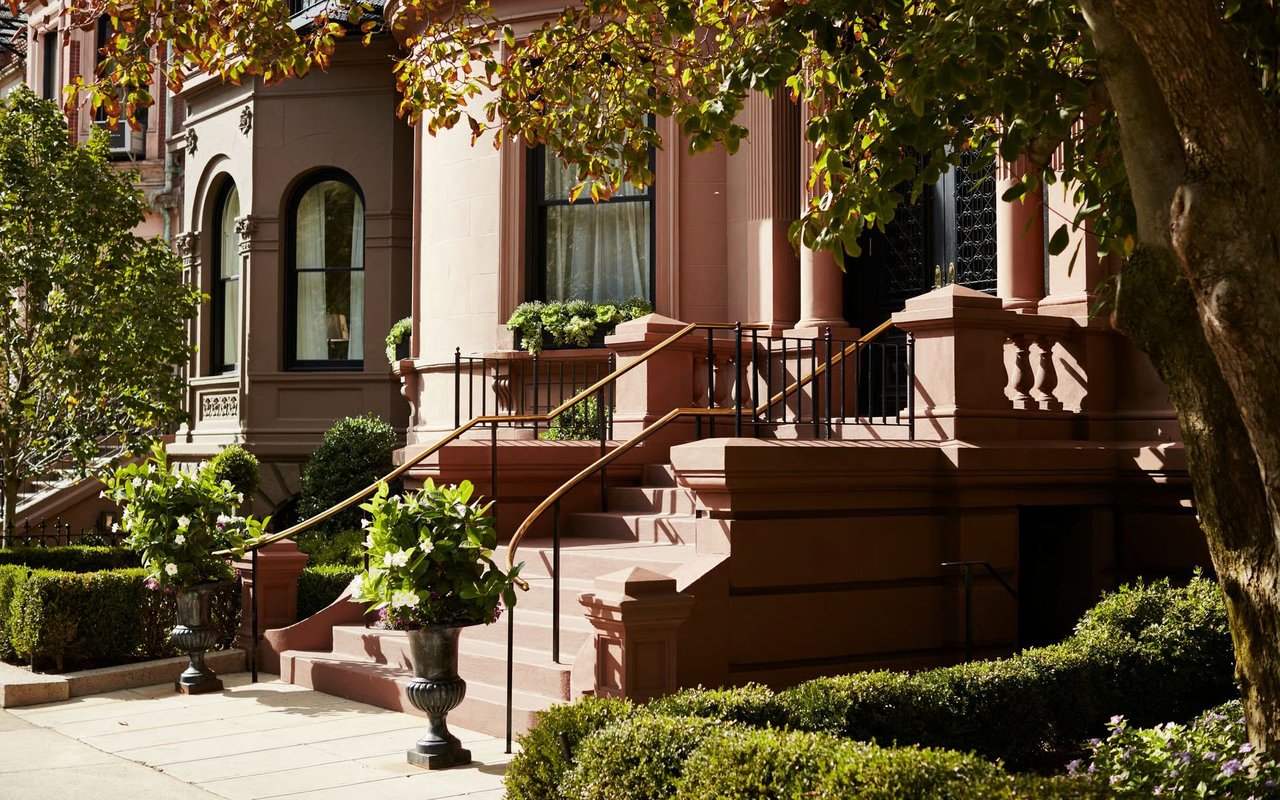
The signature property type of Back Bay. These are units carved from 19th-century brick rowhouses, ranging from garden-level flats to full-floor residences and penthouse duplexes with private roof decks and sweeping city views. Original architectural details — plaster medallions, 10–11-foot ceilings, wide-plank hardwood floors, decorative fireplaces, bay windows, and ornamental ironwork — are the most prized features and the defining characteristic of the neighborhood. Fully renovated units on premier streets like Commonwealth Avenue Mall, Marlborough Street, and Beacon Street command the highest prices; unrenovated units present genuine value-add opportunities for buyers who understand what a quality Back Bay renovation entails and delivers.
$5M – $20M+
Full-building, single-family brownstone townhouses are extraordinarily rare in Back Bay and represent the neighborhood's most exclusive real estate. These typically span 4,000–8,000+ square feet across four to six floors, offering the privacy and scale of a true house within a world-class urban neighborhood. Demand consistently exceeds available supply, and a meaningful share of these transactions never reach the MLS — they trade quietly between principals, often facilitated by agents with deep neighborhood relationships. The most coveted single-family addresses are concentrated on Commonwealth Avenue (particularly the sunny, odd numbered side), Marlborough Street, and Beacon Street. Buyers in this segment are typically upsizing from Back Bay condominiums, relocating from Beacon Hill or the suburbs, or moving from other major cities seeking Boston's finest urban residential offering. Working with an agent who has proven off-market access is not a preference in this segment — it is the only way to compete.
$1.5M – $15M+
Back Bay is home to some of New England's most prestigious luxury residential towers, including the Mandarin Oriental Residences, One Dalton (Four Seasons Private Residences), the Raffles, the "old" Four Seasons fronting on the Boston Common, and other smaller format developments in buildings like Haddon Hall, 100 Beacon, and 180 Beacon — all offering the full-service amenities of concierge, fitness, valet parking, and in many cases hotel services. These appeal to buyers who prioritize modern open-plan layouts, panoramic Charles River or city views, and white-glove service over historic architectural character. International buyers, executives, and empty nesters seeking a low-maintenance primary or secondary residence are the core purchasers in this segment. Price per square foot can rival or exceed the finest renovated brownstones.
$700K – $1.4M
Smaller studio and one-bedroom condominium units represent the most accessible entry point into Back Bay ownership. These are scattered within older buildings throughout the Back Bay, typically towards the Massachusetts Avenue end of the grid, in walk-up buildings that rarely have parking and don't often have central air and operate on antiquated central steam heat systems. They attract first-time buyers, pied-à-terre purchasers, and investors seeking strong rental income from one of Boston's tightest and most desirable rental markets. Yields are solid relative to price, given perennial demand from corporate tenants, medical fellows, and young professionals who place enormous value on Newbury Street walkability and Back Bay Station access.
Back Bay draws one of the most diverse and high-caliber buyer pools of any neighborhood in New England. Finance and private equity professionals are the largest segment, drawn by the neighborhood's proximity to the Financial District and its alignment with Back Bay's prestige and walkability. Medical professionals — physicians, researchers, and administrators from Mass General Hospital, Brigham and Women's, and the Longwood Medical Area — are a consistent and significant presence. Out-of-state relocators from New York, San Francisco, and Chicago are drawn to Boston's relative value and Back Bay's unmistakable architectural character — they arrive knowing exactly what they want. International buyers, particularly from Europe and Asia, are drawn to the security and global brand recognition of an address on Commonwealth Avenue. Empty nesters downsizing from Wellesley, Weston, and Brookline consistently prioritize Back Bay for its walkability, culture, and community. Investors target both smaller condos for strong rental yield and multi-family or full-building brownstones for long-term appreciation. And a notable share of top-tier sales come from existing Back Bay residents who are upsizing within the neighborhood — a testament to the loyalty this market inspires.
Back Bay is one of the most reliably appreciating real estate markets in New England, and its investment fundamentals are among the most durable of any Boston neighborhood. The core thesis is simple: supply is permanently constrained by landmark designation — not a single additional Victorian rowhouse can be built — while demand is structural, driven by Boston's expanding employment base in finance, life sciences, and medicine. That imbalance is not going to resolve itself.
Rental vacancy rates in Boston remain below 3%, and two-bedroom condominiums in Back Bay routinely command $4,500–$10,000 per month, with three-bedroom units ranging from $10,000–$50,000 depending on size, amenities, and level of finish. Price forecasts for 2026 project continued appreciation of 3–4% citywide, with landmark-protected neighborhoods like Back Bay consistently outperforming. The most compelling opportunities in the current market are unrenovated or partially renovated brownstone condominiums, where buyers who can execute a quality renovation are typically able to generate substantial equity relative to cost.
The single-family brownstone segment represents the highest-conviction long-term hold in Boston real estate. These properties combine absolute architectural irreplaceability, a deeply committed owner-occupant culture, and perennial scarcity — the total number of single-family brownstones in Back Bay is fixed and declining as more convert to condominiums. If you have the opportunity to buy one, you should.
Answers from Megan Kopman, who has lived and worked in Back Bay for over 20+ years.
As of 2025–2026, the average price per square foot in Boston's Back Bay ranges from approximately $1,300 to $1,900, depending on property type, street, floor, views, and renovation level. Renovated Victorian brownstones on Commonwealth Avenue Mall and Marlborough Street, and top-floor or penthouse units with Charles River views, command the highest prices — with select transactions clearing $3,000+/sq ft at the very top. The median condo sale price is approximately $1.5M–$1.7M, and there is fierce competition and multiple offers on almost every unit in that price band, with the market gaining momentum heading into 2026.
Yes, and its investment fundamentals are among the most durable in New England. Back Bay combines absolute supply scarcity — landmark designation permanently constrains the Victorian brownstone stock — with perennial demand from Boston's finance, medical, and professional communities. Prices have appreciated consistently above the broader Boston average over multiple market cycles, and the neighborhood's global name recognition and architectural character make it resilient across economic conditions. If you are looking for a neighborhood that will hold its value and continue to appreciate, Back Bay belongs at the top of your list.
Back Bay's inventory spans Victorian brownstone condominiums (the most common type, ranging from garden-level studios to full-floor penthouses with private roof decks), luxury high-rise condominiums in full-service buildings like the Mandarin Oriental Residences and One Dalton (Four Seasons), extraordinarily rare single-family brownstone townhouses ($5M–$20M+), and smaller pied-à-terre condos that represent the most accessible entry point into the neighborhood. A meaningful share of top-end transactions, particularly in the single-family segment, never reach the MLS — they trade off-market through agents with established neighborhood relationships.
Both are among Boston's most prestigious and historically protected neighborhoods, but they offer very different experiences. Back Bay is a planned Victorian grid with wide, tree-lined streets, Commonwealth Avenue's grand boulevard, Newbury Street shopping, and a more open, airy feel at a larger neighborhood scale. Beacon Hill is older (Federal era), with narrow gas-lit cobblestone streets, a tight village character, and a more intimate, somewhat quieter atmosphere. Prices are comparable at the top of both markets. The right choice depends entirely on which lifestyle resonates with you — both are exceptional.
In 2025, well-priced Back Bay properties typically sold within 25–35 days on market. Heading into 2026, the pace has accelerated: rate relief has brought motivated buyers off the sidelines, and well-presented brownstones on premier streets are seeing offers quickly, sometimes within days of listing. Properties with deferred maintenance, challenging floor plans, or unrealistic pricing can sit 60–90+ days. Correct pricing and presentation are critical — the buyers who are active right now are sophisticated and well-informed.
Yes, though the investment thesis in Back Bay differs from higher-cap-rate neighborhoods. Cap rates are typically in the 3–4.5% range, which is offset by consistent long-term appreciation and Boston's sub-3% vacancy rate. Back Bay's strongest investment opportunities are in unrenovated brownstone condos where a quality renovation can generate meaningful equity, and in the pied-à-terre segment where rental demand from corporate and medical tenants is perennial and pricing is more accessible. The single-family brownstone segment represents the highest-conviction long-term hold — the total number of intact single-family brownstones in Back Bay is fixed and only declining.
Megan Kopman of Kopman Adler + Co. (Compass) is consistently ranked among the top agents in Back Bay. With more than 20+ years of living and working in the neighborhood, over $700M in personal sales volume, a legal background as a commercial real estate attorney at Goodwin Procter, and team sales exceeding $1 billion, Megan brings both deep local expertise and rigorous transactional precision to every deal. The Kopman Adler team is ranked Top 5 for Back Bay, South End, and Beacon Hill sales volume by RealTrends and recognized as a Boston Magazine Top Producer. Contact Megan at [email protected] or 617-309-9495.